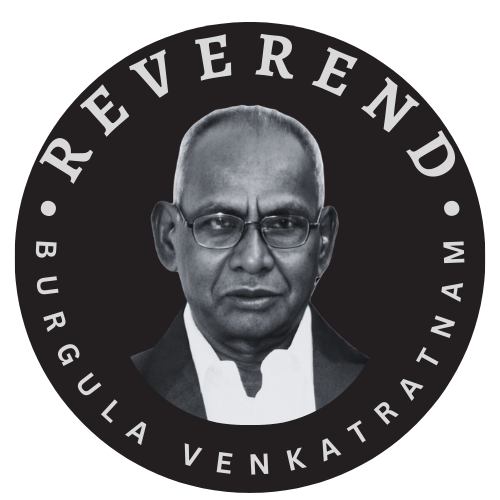

Sermon Title: Women Who Trust God: Faithful and Fearless.
Occasion: 15th Sunday after Pentecost | Women’s Sunday, 13 September 2026.
Scripture Readings: 2 Kings 22:11-20; Psalm 18:1-19; Romans 16:1-17; Matthew 15:21-28; Judges 4:1-10; Acts 1:12-14.
Original Language Reflections (For deeper study, refer to the Table of Hebrew and Greek Terms in Section VII. of the sermon).
Website: www.reverendbvr.com
Theological Thesis : Biblical courage is not the absence of fear, but the decision to trust God so deeply that fear no longer has the final word. Huldah speaks truth, Deborah leads with courage, the Canaanite woman persists in faith, Phoebe serves faithfully, and Mary with the women perseveres in prayer. Their strength does not arise merely from strong personalities. It arises from confidence in the living God.
I. Where Does Courage Come From?
Psalm 18 gives us the foundation for every other reading: “The LORD is my rock, my fortress, and my deliverer” (Ps 18:2).
The Psalm does not describe a life without danger. It speaks of enemies, overwhelming waters, darkness, distress, and death. Yet David says, “I love you, O LORD, my strength” (18:1).
That distinction matters. Faith does not pretend that danger is imaginary. Faith discovers that God is greater than the danger.
This is the secret shared by the women in today’s Scriptures. They live in different centuries and circumstances, yet each demonstrates what happens when trust in God becomes stronger than the forces demanding silence, retreat, or despair.
1. Huldah: Faithful Enough to Speak the Truth (2 Kings 22:11-20):
King Josiah’s officials discover the Book of the Law during repairs to the temple. When its words are read, Josiah tears his clothes because he realizes how seriously Judah has departed from God.
Remarkably, the royal delegation goes to Huldah the prophetess.
The Hebrew title is nevi’ah, “prophetess.” Huldah does not merely offer private spiritual encouragement. She delivers an authoritative word concerning king, nation, judgment, and repentance.[1]
Her message is not designed to please the palace. Judgment is coming, but because Josiah’s heart has become “tender” before God, he will receive mercy.
Huldah teaches us that faithful speech is not saying what powerful people want to hear. It is saying what God requires/needs to be heard.
The Church needs such courage today. Truth spoken without love becomes cruelty, but love without truth becomes sentimentality. Christian courage holds truth and love together.
2. Deborah: Courage That Enables Others to Rise (Judges 4:1-10):
Israel is suffering under the military power of Jabin and his commander Sisera. Into this crisis appears Deborah. Judges calls her both a prophet and one who was “judging Israel” (Judg 4:4). People came to her for judgment beneath the palm of Deborah. She summons Barak and gives him God’s command to confront Sisera.
Barak answers: “If you will go with me, I will go.”
Deborah goes…
Her leadership is significant because biblical leadership is not domination. Deborah hears God, discerns the moment, speaks courage into another person, and walks into danger alongside him.[2]
True spiritual authority does not always announce, “Follow me because I am powerful.” Sometimes it says, “God has called you. Do not be afraid. I will walk with you.”
3. The Canaanite Woman: Faith That Refuses to Surrender (Matthew 15:21-28):
The Gospel brings us to one of Jesus’ most challenging encounters.
Matthew deliberately calls the woman a “Canaanite,” an ancient term carrying memories of Israel’s historic enemies. She is an outsider, yet she cries: “Have mercy on me, Lord, Son of David.”
Jesus speaks of Israel’s priority in his mission and uses the image of children receiving bread before the household dogs. The Greek word kynaria refers to small or household dogs.
The woman does something extraordinary. She does not abandon faith. She replies that even the dogs receive crumbs falling from the table.
She seems to understand something profound: God’s mercy is so abundant that even the crumbs are enough.
Jesus responds: “Woman, great is your faith!”
She does not deny Israel’s place in God’s covenant purposes. She trusts that the mercy of Israel’s Messiah is abundant enough to reach beyond expected boundaries.[3]
This woman teaches us that faith sometimes looks like holy persistence. There are seasons when prayer seems unanswered, doors remain closed, and God appears silent. Faith continues to say, “Lord, I still trust your mercy.”
4. Faith Expressed Through Service(Phoebe and the Women of Romans 16) :
Paul begins Romans 16: “I commend to you our sister Phoebe.”
He describes her as a diakonos of the church at Cenchreae and a prostatis of many, including Paul himself. Diakonos can mean servant, minister, or deacon. Prostatis carries the sense of a patron or benefactor, someone who uses resources and influence to support others.[4]
Then Paul names Prisca and many other women who labored within the Christian mission.
Romans 16 reminds us that the early Church was not built by famous apostles alone. The gospel travelled through homes opened, journeys supported, churches served, strangers welcomed, believers taught, and risks taken.
The Kingdom of God often advances through faithfulness that history barely notices but heaven never forgets.
5. Mary and the Women: Courage Through Prayer (Acts 1:12-14):
After the ascension, the disciples face uncertainty. Jesus has departed, Pentecost has not yet come, and their future is unclear.
What do they do?
They pray…
Acts says they were proskarterountes, continually devoting themselves to prayer, together with the women and Mary the mother of Jesus.
Prayer here is not passive waiting. It is spiritual preparation. Before the Church preached publicly at Pentecost, it prayed privately in the upper room.
Faithful and fearless discipleship therefore begins not with self-confidence but with dependence upon God.
II. One Unified Biblical Message :
These readings form a remarkable movement:
- Huldah speaks.
- Deborah leads.
- The Canaanite woman persists.
- Phoebe serves.
- Mary and the women pray.
And beneath them all stands the confession of Psalm 18: “The LORD is my rock.”
Their courage is different because their circumstances are different. Yet their source is the same.
This is precisely what our Collect asks God to create among us: people who trust God’s promises without fear, proclaim truth boldly, remain steadfast in prayer, and serve Christ’s Kingdom with unwavering devotion.
III. On this Women’s Sunday ie, Today :
Women’s Sunday should therefore be more than a celebration of remarkable women from the past.
It should ask whether the Church today recognizes the gifts God continues to give women for prayer, theological wisdom, teaching, mercy, leadership, service, mission, prophetic witness, and courageous discipleship.
- Huldah reminds us not to silence truthful voices.
- Deborah reminds us that leadership can strengthen entire communities.
- The Canaanite woman reminds us not to underestimate persistent faith.
- Phoebe reminds us that Christian ministry includes practical, financial, relational, and ecclesial service.
- Mary and the women remind us that great movements of God are often born in rooms where faithful people are praying.
IV. Practical Life Applications
- Speak truth like Huldah. Refuse both cowardly silence and destructive speech.
- Strengthen others like Deborah. Christian leadership makes other people courageous.
- Pray persistently like the Canaanite woman. Do not interpret delay as proof that God has abandoned you.
- Serve faithfully like Phoebe. Never underestimate practical acts that sustain Christ’s mission.
- Wait upon God like Mary and the women. Before asking what you can accomplish, ask what the Holy Spirit desires to accomplish through you.
V. Conclusion:
The women in these passages were not courageous because their world was safe. à No, It was not.
They were courageous because God was faithful.
- Fear says, “You are too weak.” But Faith says, “The Lord is my strength.”
- Fear says, “Your voice does not matter.” But Faith remembers Huldah.
- Fear says, “You cannot lead.” But Faith remembers Deborah.
- Fear says, “Stop asking.” But Faith remembers the Canaanite woman.
- Fear says, “Your service is insignificant.” But Faith remembers Phoebe.
- Fear says, “Nothing is happening.” But Faith remembers the women praying in the upper room.
Therefore, faithful women and men of God can say together: “The LORD is my rock, my fortress, and my deliverer.”
VI. Closing Prayer
Almighty and ever-living God, our Rock, our Fortress, and our Deliverer,
Give us the truthful courage of Huldah, the discerning strength of Deborah, the persistent faith of the Canaanite woman, the generous service of Phoebe, and the steadfast prayer of Mary and the faithful women.
Where fear silences us, give us holy courage. Where disappointment weakens us, deepen our trust. Where your Church fails to recognize the gifts, you have given, open our eyes.
Pour out your Holy Spirit upon the women of your Church today, that through their faith, wisdom, witness, service, and love, Christ may be made known. Through Jesus Christ our Lord. Amen.
VII. Original-Language Word Study:
| S.No | Passage | Verse | Word | Transliteration | Literal Meaning | Theological Significance | Theme |
| 1 | 2 Kings | 22:14 | נְבִיאָה | nevi’ah | Prophetess | Huldah bears an authoritative divine message | Courage to proclaim truth |
| 2 | Psalm | 18:2 | צוּרִי | tsuri | My rock | God is the secure foundation of courage | Trust over fear |
| 3 | Judges | 4:4 | שֹׁפְטָה | shofetah | She was judging | Deborah exercises God-given discernment and leadership | Courageous leadership |
| 4 | Romans | 16:1 | διάκονος | diakonos | Servant, minister, deacon | Phoebe serves the church in recognized ministry | Faithful service |
| 5 | Romans | 16:2 | προστάτις | prostatis | Patron, benefactor | Phoebe uses influence and resources for others | Generous discipleship |
| 6 | Matthew | 15:28 | πίστις | pistis | Faith, trust | Jesus praises persistent trust | Fearless faith |
| 7 | Acts | 1:14 | προσκαρτερέω | proskartereō | Persist, devote oneself | The women remain steadfast in prayer | Prayerful perseverance |
VIII. Footnotes for Personal Study
- Mordechai Cogan and Hayim Tadmor, II Kings, Anchor Bible 11 (New Haven: Yale University Press, 1988).
- Daniel I. Block, Judges, Ruth, New American Commentary 6 (Nashville: Broadman & Holman, 1999).
- R. T. France, The Gospel of Matthew, New International Commentary on the New Testament (Grand Rapids: Eerdmans, 2007).
- Douglas J. Moo, The Letter to the Romans, 2nd ed., New International Commentary on the New Testament (Grand Rapids: Eerdmans, 2018).
- Walter Bauer, Frederick William Danker, William F. Arndt, and F. Wilbur Gingrich, A Greek-English Lexicon of the New Testament and Other Early Christian Literature, 3rd ed. (Chicago: University of Chicago Press, 2000).
IX. Bibliography
- Block, Daniel I. Judges, Ruth. New American Commentary 6. Nashville: Broadman & Holman, 1999.
- Cogan, Mordechai, and Hayim Tadmor. II Kings. Anchor Bible 11. New Haven: Yale University Press, 1988.
- France, R. T. The Gospel of Matthew. New International Commentary on the New Testament. Grand Rapids: Eerdmans, 2007.
- Moo, Douglas J. The Letter to the Romans. 2nd ed. New International Commentary on the New Testament. Grand Rapids: Eerdmans, 2018.
- Bauer, Walter, Frederick William Danker, William F. Arndt, and F. Wilbur Gingrich. A Greek-English Lexicon of the New Testament and Other Early Christian Literature. 3rd ed. Chicago: University of Chicago Press, 2000.
© 2025 ReverendBVR.com | High-Academic Sermon Series, 2026.
Content licensed under Creative Commons Attribution-NonCommercial-NoDerivatives 4.0 International (CC BY-NC-ND 4.0). You are free to share, copy and redistribute the material in any medium or format with proper attribution. No commercial use or modifications allowed without explicit permission.
For further sermons and biblical reflections, please visit 🌐 www.reverendbvr.com/sermons
Leave a Reply