
On Unity Sunday, we are called to rediscover our identity as branches of the True Vine—Jesus Christ—whose life flows through us, binding diverse members into one Body and empowering us to bear lasting fruit for God’s glory. As the prophetic sticks in Ezekiel were joined in one hand, so too are we grafted into one holy communion, where true unity is not uniformity but Spirit-filled interdependence.
Sermon Title: Vine and Branches
Occasion: Unity Sunday | November 9, 2025, Sunday.
Textual Foundations: Ezekiel 37:15–23| Psalm 133| 1 Corinthians 12:12–27| John 15:1–8
Original Language Reflections (For deeper study, refer to the Table of Hebrew and Greek Terms in Section 3 of the sermon).
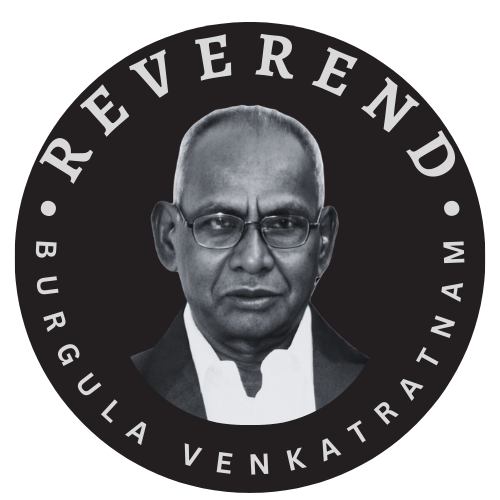
By Reverend B.V.R. Memorial Ministry | www.reverendbvr.com
1.Introduction: The Vine and the Vision of Unity
Unity Sunday is a sacred invitation to remember and reclaim our divine interconnectedness in Christ. The readings for today speak powerfully across centuries and covenants, from prophetic visions of national restoration (Ezekiel), poetic celebrations of community harmony (Psalm 133), ecclesial teachings of bodily integration (1 Corinthians), to Christ’s own metaphor of organic union in John 15.
The image of the vine and branches is not merely agricultural but deeply theological. It is Christological, Trinitarian, ecclesial, and missional. In this metaphor, Jesus speaks not only of spiritual intimacy but of a profound reality: our fruitfulness, identity, and unity stem entirely from our abiding in Him. And on Unity Sunday, we are called to rediscover what it means to be truly one in Christ—not just in sentiment but in structure, substance, and spirit.
I. Ezekiel 37:15–23: A Prophetic Blueprint for Unity
The vision of the two sticks in Ezekiel 37 symbolizes the long-standing division between the northern kingdom (Israel/Ephraim) and the southern kingdom (Judah). The prophet is told to join two wooden sticks (עץ etzetz, “wood, tree, stick”) to signify their reunification: “They will become one (אחד echadechad) in my hand” (v. 19). This gesture is not just symbolic nationalism but a messianic prophecy: a single kingdom under one king (מלך melekmelek) who would shepherd them in purity and covenant fidelity.
This vision prefigures the unity achieved in Christ—a unity not enforced by law but infused by grace. The image of two sticks becoming one foreshadows the integration of Jew and Gentile, slave and free, male and female in one body (cf. Galatians 3:28).
II. Psalm 133: The Beauty of Communal Blessing
“How good and pleasant it is when brothers dwell in unity!” (יחד yachadyachad, v.1). Unity here is likened to two priestly and natural images: the anointing oil flowing on Aaron’s beard and the dew of Hermon descending upon Zion. Theologically, oil and dew represent the Spirit and divine blessing, linking priestly consecration and natural abundance to communal harmony.
This Psalm finds fulfillment in Pentecost (Acts 2), when the Spirit descended upon a unified assembly of disciples, including men, women, and Mary the Mother of Jesus (Acts 1:14). The Church’s unity is both a condition and consequence of divine indwelling.
III. 1 Corinthians 12:12–27: Unity in Diversity of the Body
The Apostle Paul develops a powerful analogy of the Church as the sōma Christou (σῶμα Χριστοῦ), the Body of Christ. Each member, no matter how small or seemingly insignificant, is essential. There is no superiority in the body, only synergy (συνεργία), where the hand cannot say to the eye, “I don’t need you” (v. 21).
In the Corinthian context of factionalism and elitism, Paul’s metaphor was radically egalitarian. Unity in Christ is not uniformity but interdependence. The diversity of gifts, roles, and cultural backgrounds is held together by the one Spirit (πνεῖμα pneumapneuma), who baptizes us into one body (v.13).
IV. John 15:1–8: Abiding in the True Vine
Jesus declares, “I am the true vine (η αμπεθινη άμπελος, hē ampelos hē alēthinē), and my Father is the gardener.” This is a high Christological claim: Israel was often referred to as God’s vine (cf. Psalm 80:8, Isaiah 5:1–7), yet it failed to bear fruit. Now Jesus positions Himself as the true and faithful vine.
Branches (κλήματα kleˉmataklēmata) must remain (μένετε menetemenete) in the vine to be fruitful. The Greek word μένω (menō) means “to abide, stay, remain.” Abiding in Christ involves a continual, conscious communion. Without this union, we become like withered branches, spiritually sterile and lifeless.
Fruitfulness is not optional. It is the outward sign of inward life. And this fruit glorifies the Father and authenticates discipleship (v.8).
V. Pastoral Application: Becoming One in Christ Today
Unity Sunday calls us beyond denominationalism, tribalism, or nationalism. In a world fragmented by ideology, identity politics, and religious partisanship, the Church must embody the unity of the Spirit in the bond of peace (Ephesians 4:3).
To abide in Christ is to abide in one another. True unity is not a human achievement but a divine gift we participate in. It demands 4H’s:
- Humility (Philippians 2:1–11): valuing others above ourselves.
- Hospitality (Romans 12:13): welcoming the other as Christ.
- Holiness (John 15:3): remaining clean through the Word.
- Harmony (1 Corinthians 1:10): striving for agreement in Christ.
VI. Conclusion: Unity as Witness
Jesus prayed in John 17:21, “that they may all be one… so that the world may believe.” Our unity is missional. A divided church presents a distorted Christ. But when we live as branches of one Vine, parts of one Body, and citizens of one Kingdom, the world sees the love of the Triune God manifest on earth.
Let us then live as one—not merely together but truly united: rooted in Christ, pruned by the Father, bearing fruit through the Spirit.
2. Closing Prayer:
O Triune God, Eternal Vine and Gracious Gardener, You have grafted us into Christ, your Son, Make us one, as You are One: One in faith, One in hope, One in love.
Prune from us the pride and prejudice that divide, And nourish us with your Word and Spirit,
That we may bear the fruit of justice, mercy, and peace. In Jesus’ name we pray. Amen.
3. Learn Words from the Original Scriptures (For deeper understanding and meditation on today’s theme)
| S.No | Term –Click on each term to view its lexical details | Language | Meaning | Reference |
| 1 | עץ (etz) | Hebrew | Stick, wood | Ezekiel 37:16 |
| 2 | אחד (echad) | Hebrew | One, unity | Ezekiel 37:19 |
| 3 | יחד (yachad) | Hebrew | Together, unity | Psalm 133:1 |
| 4 | σῶμα Χριστοῦ (sōma Christou) | Greek | Body of Christ | 1 Cor 12:27 |
| 5 | πνεῖμα (pneuma) | Greek | Spirit, breath | 1 Cor 12:13 |
| 6 | η αμπελος η αληθινη (hē ampelos hē alēthinē) | Greek | The true vine | John 15:1 |
| 7 | κλήματα (klēmata) | Greek | Branches | John 15:5 |
| 8 | μένω (menō) | Greek | Abide, remain | John 15:4 |
4. Bibliography:
- Bauckham, Richard. Bible and Mission: Christian Witness in a Postmodern World. Eerdmans, 2003.
- Wright, N.T. Paul and the Faithfulness of God. Fortress Press, 2013.
- Brueggemann, Walter. Ezekiel. Westminster John Knox Press, 1997.
- Fee, Gordon D. The First Epistle to the Corinthians. NICNT. Eerdmans, 1987.
- Carson, D.A. The Gospel According to John. PNTC. Eerdmans, 1991.
- Motyer, Alec. Psalms by the Day. Christian Focus Publications, 2016.
- Theological Dictionary of the New Testament (TDNT). Edited by Gerhard Kittel. Eerdmans.
© 2025 ReverendBVR.com | High-Academic Sermon Series, 2025.
Content licensed under Creative Commons Attribution-NonCommercial-NoDerivatives 4.0 International (CC BY-NC-ND 4.0). You are free to share — copy and redistribute the material in any medium or format with proper attribution. No commercial use or modifications allowed without explicit permission.
For further sermons and biblical reflections, please visit 🌐 www.reverendbvr.com/sermons