
Introduction: The Darkest Cry Ever Spoken:
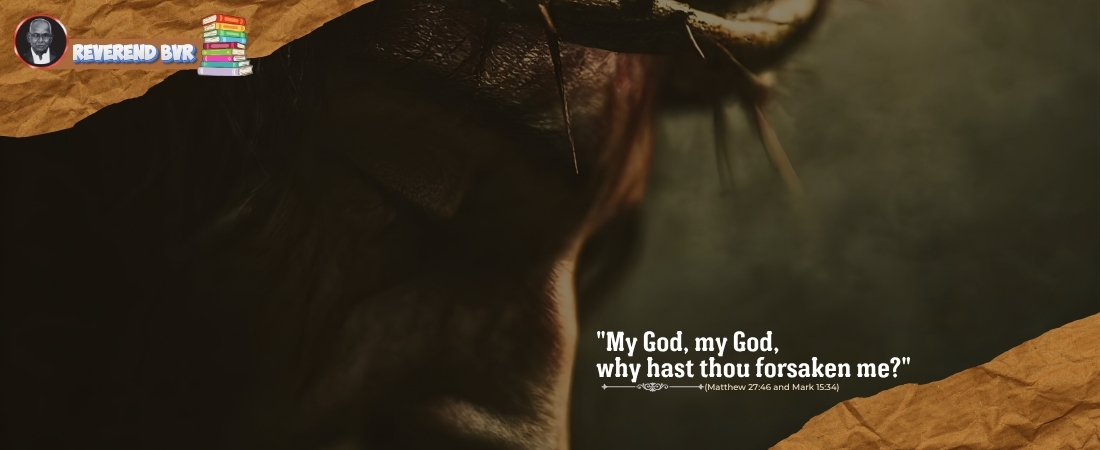
Among the Seven Words of Christ on the Cross, none is more haunting or theologically profound than the cry: “My God, my God, why hast thou forsaken me?” (Matthew 27:46; Mark 15:34)
At first hearing, these words disturb us. How could the eternal Son of God feel abandoned by the Father?
The one who taught “I and the Father are one” (John 10:30) now cries out in apparent separation. Yet this cry is not despair. It is the deepest revelation of the mystery of redemption.
Theological Thesis:
Christ’s cry of abandonment reveals that the Son of God fully enters the depths of human suffering and sin in order to redeem humanity, fulfilling the prophetic suffering of Psalm 22 and transforming abandonment into hope.
The cross therefore becomes the place where:
- Human despair meets divine redemption
- Sin meets mercy
- Abandonment becomes salvation
I. The Historical Moment: Darkness at the Cross
The cry occurs at the most dramatic moment of the crucifixion narrative. Matthew records: “About the ninth hour Jesus cried with a loud voice…” (Matthew 27:46). The ninth hour (around 3 PM) marks the moment when darkness covered the land (Matt 27:45).
In biblical symbolism, darkness often represents:
- Judgment
- Cosmic sorrow
- Divine intervention
Here, creation itself mourns. The crucifixion is not merely a tragic execution. It is the cosmic turning point of salvation history.
II. The Scriptural Root: Jesus Quotes Psalm 22:
Jesus is not speaking randomly. He is quoting Psalm 22:1, written nearly a thousand years earlier. Psalm 22 begins with lament but ends with triumph. The psalm describes astonishing details that resemble crucifixion:
- Mocking enemies (Psalm 22:7–8)
- Pierced hands and feet (Psalm 22:16)
- Dividing garments (Psalm 22:18)
Thus, when Jesus quotes the opening line, He is invoking the entire psalm. What begins in abandonment ends in victory: “All the ends of the earth shall remember and turn to the LORD.” (Psalm 22:27), The cross therefore fulfills ancient prophecy.
III. Theological Mystery: Did the Father Abandon the Son?
This question has troubled theologians for centuries. The answer requires careful understanding.
- Not a Breakdown of the Trinity: The Trinity cannot be divided. The Father, Son, and Holy Spirit remain eternally united.
- A Real Experience of Human Abandonment: Jesus fully entered human suffering. As Paul writes: “God made him who knew no sin to be sin for us.” (2 Corinthians 5:21). On the cross, Christ bears the weight of humanity’s sin. The result is the felt experience of God-forsakenness that sin produces. Christ stands where sinners stand.
- 3. The Great Exchange: The cross reveals the mystery of substitution: Christ takes our abandonment. so we may receive God’s presence.
IV. The Psychological Depth: Christ Shares Human Despair
This cry makes Christianity profoundly relevant to human suffering. Every generation asks:
- Where is God when we suffer?
- Why does God seem silent?
- Why do faithful people experience darkness?
Christ answers not with explanations but with solidarity. God does not remain distant from suffering. He enters it.
Theologian Jürgen Moltmann famously wrote: “The crucified God is the God who suffers with us.”
This means: No human sorrow is outside God’s understanding.
V. The Hidden Hope Within the Cry
Though the words sound like despair, hope is hidden within them. Jesus still says: “My God.”
Even in abandonment, He maintains faith. The relationship is strained but not broken. This teaches us something profound about faith:
Faith is not the absence of struggle. Faith is trusting God within the struggle.
VI. Contemporary Reflection: When God Feels Silent
Modern life contains many moments that echo this cry. People experience:
- Depression and loneliness
- Loss of loved ones
- Social injustice
- Betrayal and rejection
In such moments many silently ask: “God, where are you?” The cross answers: God is not absent. He is present in suffering itself.
The Christian faith does not promise a life without pain. But it promises a God who suffers with us and redeems suffering.
VII. Practical Life Applications:
- Bring Your Pain Honestly to God: The Bible allows lament. Faith includes crying out. God welcomes our honest prayers.
- Trust God Even When You Do Not Understand: Jesus continued to trust the Father. Faith sometimes means walking through darkness.
- Stand With Those Who Suffer: If God entered suffering, Christians must do the same. True discipleship includes compassion.
VIII. The Cross as the Turning Point of History:
The cry of abandonment is not the final word. Soon Jesus will say: “It is finished.” (John 19:30) And then: “Father, into your hands I commend my spirit.” (Luke 23:46). The movement is clear: Abandonment → Completion → Trust.
The cross transforms suffering into salvation.
IX. Table: Original Biblical Words of the Cry of Abandonment
| S.No | Passage | Original Language Text | Transliteration | Key Word Meaning | Notes |
| 1 | Psalm 22:1 | אֵלִי אֵלִי לָמָה עֲזַבְתָּנִי | Eli Eli lama azavtani | My God, my God, why have you forsaken me | Hebrew lament of David |
| 2 | Matthew 27:46 | Ἠλί Ἠλί λεμὰ σαβαχθανί | Eli Eli lema sabachthani | My God, my God, why have you forsaken me | Aramaic phrase recorded in Greek |
| 3 | Matthew 27:46 (Greek explanation) | Θεέ μου, Θεέ μου, ἱνατί με ἐγκατέλιπες | Thee mou, Thee mou, hinati me enkatelipes | Why did you abandon me | Greek translation in text |
| 4 | Mark 15:34 | Ἐλωΐ Ἐλωΐ λεμὰ σαβαχθανί | Eloi Eloi lema sabachthani | My God, my God, why have you forsaken me | Aramaic dialect variant |
| 5 | Psalm 22:16 | כָּאֲרִי יָדַי וְרַגְלָי | Ka’ari yadai v’raglai | They pierced my hands and feet | Messianic imagery |
| 6 | Psalm 22:18 | יַחְלְקוּ בְגָדַי לָהֶם | Yachlequ begadai lahem | They divide my garments | Fulfilled at crucifixion |
X. The Collect Prayer (Integrated Reflection):
Many Good Friday liturgies pray: “Almighty God, who by the passion of your blessed Son made an instrument of shame to become the means of life…”
The cross: once a symbol of humiliation becomes the instrument of salvation. The cry of abandonment therefore reveals: God transforms the darkest moment into redemption.
XI. Conclusion: The God Who Knows Our Darkness:
When Jesus cried, “My God, my God, why have you forsaken me?” He stepped into the deepest human question.
Yet the resurrection will soon reveal the answer: God never abandons His people.
The silence of Good Friday becomes the victory of Easter morning.
XII. Let us Pray:
Gracious and eternal God, You who heard the cry of your Son in the darkness of the cross, Teach us to trust you when life feels uncertain and when suffering clouds our faith.
When we feel abandoned, remind us that Christ has walked that path before us.
When our hearts are heavy, give us the courage to cry out to you honestly.
And when the night seems longest, fill us with the hope that the dawn of resurrection is near.
Through Jesus Christ our Lord, who suffered, died, and rose again to bring life to the world. Amen.
© 2025 ReverendBVR.com | High-Academic Sermon Series, 2026.
Content licensed under Creative Commons Attribution-NonCommercial-NoDerivatives 4.0 International (CC BY-NC-ND 4.0). You are free to share — copy and redistribute the material in any medium or format with proper attribution. No commercial use or modifications allowed without explicit permission.
For further sermons and biblical reflections, please visit 🌐 www.reverendbvr.com/sermons
Leave a Reply