Introduction: The First Word from the Cross
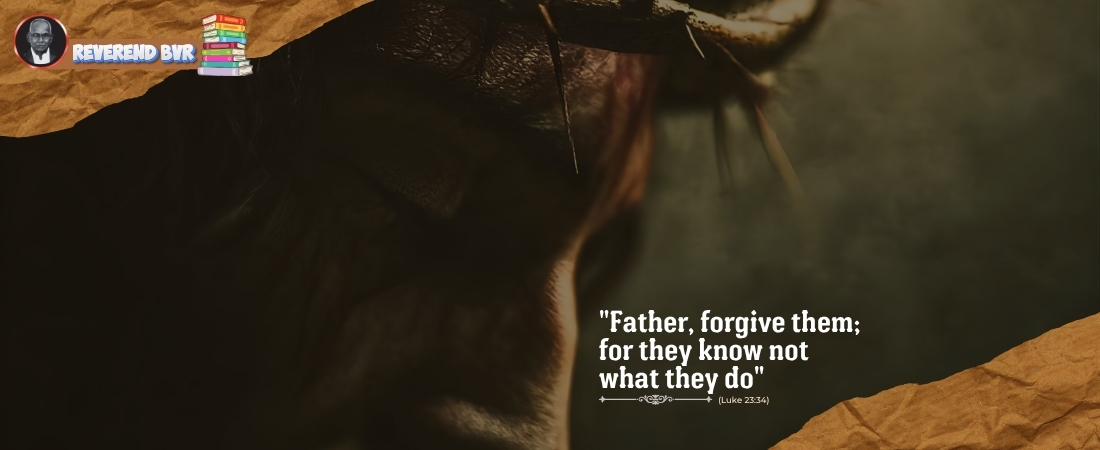
Among the seven sayings of Christ from the cross, the first one is perhaps the most astonishing one: “Father, forgive them; for they know not what they do.” (Luke 23:34)
These words are spoken not in comfort, not in safety, but in the moment of extreme injustice and agony. Nails have pierced His hands. The crowd mocks. Soldiers gamble for His clothes. Religious leaders ridicule Him.
And yet the first response of the crucified Messiah is not condemnation, but it is intercession.
This moment reveals the deepest truth about God’s character and the heart of the gospel: At the very moment humanity rejects God most violently, God responds with forgiveness.
Theological Thesis:
The prayer of Jesus on the cross reveals that God’s justice is fulfilled through divine mercy, and that Christ’s crucifixion is not merely an act of suffering but the supreme intercession for human ignorance, sin, and rebellion.
The cross therefore becomes the place where:
- Sin is exposed
- Human ignorance is confronted
- Divine mercy triumphs
1. The Historical and Biblical Context of the Prayer
Luke uniquely records this prayer of Jesus. It occurs immediately after the crucifixion begins: “And when they came to the place that is called The Skull, there they crucified him… And Jesus said, ‘Father, forgive them.’” (Luke 23:33–34)
The setting is deeply ironic. Those involved in the crucifixion include:
| S.No | Group | Their Role |
| 1 | Roman soldiers | Carry out the execution |
| 2 | Jewish leaders | Demand Jesus’ death |
| 3 | The crowd | Watches and mocks |
| 4 | Passersby | Ridicule Him |
Every group participates in the injustice. Yet Jesus prays not against them, but for them.
This prayer fulfills the prophecy of Isaiah 53:12: “He bore the sin of many and made intercession for the transgressors.”
Even while dying, Christ continues His priestly work.
2. The Meaning of “They Know Not What They Do”
Jesus identifies a profound reality about sin i.e., Human blindness.
The phrase “they know not” does not excuse sin but reveals its tragic depth. Humanity often commits evil without recognizing its true significance.
The apostle Paul later explains this same truth: “None of the rulers of this age understood this; for if they had, they would not have crucified the Lord of glory.” (1 Corinthians 2:8).
Their ignorance is not intellectual alone; it is spiritual blindness.
They saw a man, They condemned a teacher and They executed a criminal. –> But in truth they were crucifying the Son of God.
Thus, the cross reveals a tragic paradox: Human beings can oppose God while believing they are defending righteousness.
3. The Prayer Reveals the Heart of God:
The prayer begins with one simple word: “Father.” Even in suffering, Jesus remains in perfect communion with God. The cross does not destroy the relationship between Father and Son; rather, it reveals the depth of divine love.
In this prayer we see three dimensions of God’s character:
1. God’s Mercy:
Forgiveness is offered before repentance is expressed. Jesus does not say: “Father, forgive them if they repent.” He simply prays: “Father, forgive them.”
This reflects the biblical truth that grace precedes repentance. God moves toward sinners before they turn toward Him.
2. God’s Patience:
Throughout Scripture God responds to human rebellion with patience.
Consider:
- Israel worships the golden calf – God shows mercy (Exodus 32)
- David commits grave sin – God forgives (Psalm 51)
- Nineveh repents – God spares them (Jonah 3).
At the cross this patience reaches its climax. Humanity rejects God’s Son and yet God offers forgiveness.
3. God’s Redemptive Purpose:
The crucifixion appears to be a defeat. But in reality it becomes the instrument of salvation.
Peter later declares to the crowd in Jerusalem: “You crucified and killed him by the hands of lawless men… but God raised him up.” (Acts 2:23–24)
The cross therefore reveals the mysterious truth: Human evil cannot defeat God’s redemptive plan. Instead, God transforms evil into the means of redemption.
4. The Cross as Intercession:
Notice that Jesus does not merely suffer, He prays. This is profoundly significant. Jesus fulfills the role of High Priest even on the cross.
Hebrews later explains: “He always lives to make intercession for them.” (Hebrews 7:25)
The intercession that began on the cross continues even now. Christ still prays for humanity.
The cross therefore reveals that salvation is not merely an event in history, it is a continuing work of divine advocacy.
5. The Transforming Power of Forgiveness: This prayer begins to bear fruit almost immediately. Several people near the cross are transformed.
- The Roman Centurion: After witnessing Jesus’ death he declares: “Certainly this man was innocent.” (Luke 23:47)
- The Repentant Thief: One of the criminals crucified beside Jesus says: “Jesus, remember me when you come into your kingdom.” (Luke 23:42)
Jesus responds: “Today you will be with me in paradise.” (Luke 23:43)
Even in death Jesus continues saving.
6. Contemporary Reflection: The Cross in Our World
Modern society still reflects the same patterns present at the crucifixion.
People harm others through: prejudice, injustice, anger, ignorance and self-interest etc. Often they do not fully understand the consequences of their actions. The prayer of Christ challenges us with a radical question:
How do we respond to those who wrong us?
Human instinct says:
- retaliate
- condemn
- cancel
- seek revenge
Christ calls us to something different: forgiveness rooted in divine mercy. This does not mean ignoring injustice. But it means refusing to let hatred define our hearts.
7. The Spiritual Practice of Forgiveness
Forgiveness in Christian faith is not weakness. It is participation in the life of Christ.
Jesus teaches in the Lord’s Prayer: “Forgive us our trespasses, as we forgive those who trespass against us.” (Matthew 6:12)
When believers forgive others, they reflect the very character of God.
The cross therefore becomes both: 1. the source of forgiveness; 2. the model of forgiveness
8. The Collect Prayer and Its Meaning
Traditional Good Friday prayers often ask God: “Grant us grace to follow the example of your Son.”
This prayer reminds us that the cross is not merely something we observe, it is something we enter into spiritually. Through grace, believers learn to embody Christ’s mercy in daily life. Thus the cross shapes our attitudes towards :
- enemies
- injustice
- suffering
- reconciliation
Original Language Word Study Table
| S.No | Verse | Original Word | Language | Actual Word | Meaning |
| 1 | Luke 23:34 | Father | Greek | Πάτερ (Pater) | Intimate address to God |
| 2 | Luke 23:34 | Forgive | Greek | ἄφες (aphes) | Release, cancel a debt |
| 3 | Luke 23:34 | They know | Greek | οἴδασιν (oidasin) | To understand or perceive |
| 4 | Luke 23:34 | What they do | Greek | τί ποιοῦσιν (ti poiousin) | What they are doing |
| 5 | Isaiah 53:12 | Intercession | Hebrew | פָּגַע (pagaʿ) | To plead or intercede |
| 6 | Isaiah 53:12 | Transgressors | Hebrew | פֹּשְׁעִים (poshe’im) | Rebels, lawbreakers |
| 7 | Luke 23:47 | Innocent/Righteous | Greek | δίκαιος (dikaios) | Just, righteous |
| 8 | Luke 23:42 | Remember | Greek | μνήσθητί (mnēsthēti) | To call to mind, show mercy |
| 9 | Luke 23:43 | Paradise | Greek | παράδεισος (paradeisos) | Garden of God, place of blessing |
Conclusion: The first word from the cross teaches us that:
- God’s mercy is greater than human sin.
- Forgiveness is the heart of the gospel.
- The cross is not only the place where Jesus dies, it is the place where God forgives the world.
When Christ prays: “Father, forgive them.”
He prays not only for the soldiers and the crowd. He prays for all humanity. He prays for us.
Let us Pray:
Merciful Father, At the foot of the cross we stand in awe of Your Son,
who in the hour of deepest suffering spoke words of mercy rather than judgment.
When hatred surrounded Him, He offered forgiveness. When injustice condemned Him, He prayed for His enemies.
Grant us the grace to understand the depth of that love.
Teach us to recognize our own blindness, to repent of the ways we harm others knowingly and unknowingly, and to receive the forgiveness purchased by Christ’s sacrifice.
Transform our hearts so that we may become instruments of Your mercy in the world: healing wounds, restoring relationships, and reflecting the compassion of Christ.
May the prayer of the crucified Savior echo within us, until our lives themselves become prayers of forgiveness.
Through Jesus Christ our Lord, who lives and reigns with You and the Holy Spirit, one God, now and forever.
Amen.
© 2025 ReverendBVR.com | High-Academic Sermon Series, 2026.
Content licensed under Creative Commons Attribution-NonCommercial-NoDerivatives 4.0 International (CC BY-NC-ND 4.0). You are free to share — copy and redistribute the material in any medium or format with proper attribution. No commercial use or modifications allowed without explicit permission.
For further sermons and biblical reflections, please visit 🌐 www.reverendbvr.com/sermons
Leave a Reply