Sermon Title: Proclaim the Good News: By Every Means Possible.
Occasion: 5th Sunday after Easter | May 10, 2026. | Communication Sunday
Bible Readings: Isa. 52: 7-15 | Psalm 96 | Epistle 1 Cor. 9: 19-23 | Gospel Mark 16: 14-20 | Exo. 4: 10-17 / Eph. 4: 20-25.
Original Language Reflections (For deeper study, refer to the Table of Hebrew and Greek Terms in Section VI. of the sermon).
Website: www.reverendbvr.com
Theological Thesis: God is not silent. From creation to Christ, from prophets to apostles, Our God is a communicating God: One who speaks, sends, embodies, and entrusts the Good News to human voices and lives. The calling of the Church is not merely to possess the gospel but to participate in God’s ongoing act of communication by every means possible, so that the reconciling love of God may reach every person, culture, and circumstance.
A Word Before We Begin
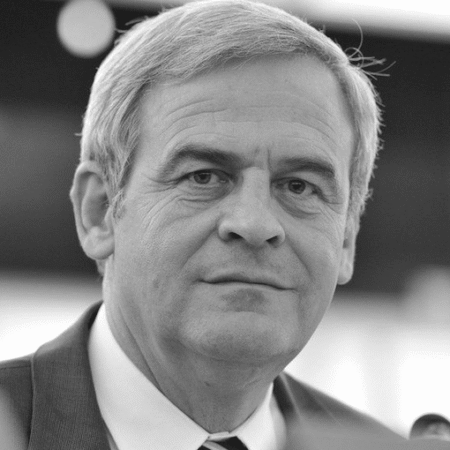
In 1989, a Romanian pastor named László Tőkés refused to be silenced by a brutal government. His congregation formed a human chain around his church. No banners. No speeches. Just bodies standing in the cold, saying with their presence what could not be safely spoken aloud. That act of embodied witness sparked a revolution. He never shouted. He simply stood. And the world heard.
Before you read another word, pause and think: Who preached to you before they ever opened their mouth? A grandmother? A neighbor? A teacher whose life was its own sermon? What did they communicate without speaking?
That is where we begin today. not with technique, not with theory, but with the ancient, urgent, beautiful conviction that God is still speaking, still sending, and still asking ordinary people to carry extraordinary news.
1. God Speaks First
A. The Messenger’s Feet (Isaiah 52:7–15):
The prophet Isaiah announces a vision of restoration after exile. At the heart of this passage is one of the most arresting images in all of Scripture:
“How beautiful upon the mountains are the feet of the messenger who announces peace.” (Isaiah 52:7)
Stop there. Let us sit with that image for a moment.
Beautiful feet. Not beautiful words. Not beautiful theology. Not a beautiful voice. Feet. Dusty, tired, calloused feet that walked the hard road across difficult terrain to bring good news to broken people. God celebrates the journey, not just the message. God honors the willingness to go.
The Hebrew word מְבַשֵּׂר (mebasser) means one who brings good news, Its the same root that gives us the New Testament word for “gospel.” This is not abstract theology; it is embodied proclamation. The message travels by feet, through terrain, toward people who have been waiting in silence.
Isaiah insists that salvation is not private consolation but public announcement. God’s reign must be heard, seen, and recognized among the nations. Communication here is missional, not ornamental. God’s word restores dignity to ruins, awakens watchmen, and re-establishes hope where silence once reigned.
B. A Song That Spills Beyond Israel (Psalm 96):
Psalm 96 takes Isaiah’s vision and sets it to music. The psalmist commands: “Declare his glory among the nations.”
The Hebrew verb סַפְּרוּ (sapperu) means to recount, narrate, proclaim. Worship becomes testimony. Praise becomes proclamation. Song becomes mission.
This is crucial: communication is not limited to preaching. It includes music, joy, beauty, and public witness. The gospel is not merely spoken; it is sung into the world. Some of you will never preach a sermon. But you may sing one. You may paint one. You may cook one. You may build one with your hands.
Reflection: How is the good news already flowing through your life in ways that go beyond words?
2. God Speaks Through Us, Even Reluctant Voices
A. The God Who Answers Our Excuses (Exodus 4:10–17):
Moses stands before a burning bush and does what most of us do when God calls: he makes excuses.
“O my Lord, I have never been eloquent… I am slow of speech and slow of tongue.” (Exodus 4:10)
And isn’t that most of us? We feel unqualified. We stumble over words. We worry we’ll say the wrong thing, embarrass ourselves, misrepresent the gospel. We think: surely God could find someone better.
Notice what God does not say. God does not say, “You’re right, Moses. Find someone better.” God does not say, “Let me fix your speech impediment first.” God says:
“Who gives speech to mortals? Who makes them mute or deaf, seeing or blind? Is it not I, the Lord?” (Exodus 4:11)
God is not looking for eloquence. God is looking for availability.
And then —> grace upon grace —> God gives Moses Aaron as a partner. Aaron will be Moses’ mouth. Moses will give Aaron the words. This is not a consolation prize. This is a revelation: communication in God’s economy is often communal. We are not meant to do this alone. Your weakness is not a disqualification. It is an invitation to partnership —> with God, and with one another.
Honest question: What is your excuse today? And if God were to answer it directly, What would God say back?
B. Paul as a Language Learner (1 Corinthians 9:19–23)
The apostle Paul offers one of the most theologically rich reflections on communication in the New Testament: “I have become all things to all people, that I might by all means save some.” (1 Corinthians 9:22)
The Greek phrase τοῖς πᾶσιν γέγονα πάντα (tois pasin gegona panta) reveals intentional adaptability. Paul does not simply translate words, he translates himself. He sits where people sit. He eats what people eat. He enters their world without abandoning the gospel.
This is not compromise. This is incarnation. It is precisely what Jesus did first: leaving the courts of heaven to enter a stable in Bethlehem, speaking Aramaic to fishermen, touching lepers, dining with tax collectors. Love that crosses boundaries without surrendering truth.
Paul’s theology here is a mirror held up to the Church: Are we speaking a language our neighbors actually understand? Are we entering their world, or merely shouting from ours?
Consider: What “language” does the person or community you most want to reach actually speak, and what would it cost you to learn it?
3. God Speaks With Us: Divine-Human Partnership
A. Sent Amid Weakness (Mark 16:14–20)
In Mark’s Gospel, the risen Christ confronts disciples marked by disbelief and fear. He rebukes their hardness of heart. And then, before they have recovered, before they have cleaned themselves up, before their faith is anything like perfect.. He sends them: “Go into all the world and proclaim the good news to the whole creation.” (Mark 16:15)
The Greek κηρύξατε (kēryxate) means to herald publicly, as a town crier heralds a royal announcement. The command does not wait for perfect faith. Mission begins amid weakness.
And then the text does something remarkable. It does not end with a triumph of human achievement. It ends with this line, perhaps the most encouraging sentence in all of Mark’s Gospel: “And the Lord worked with them.” (Mark 16:20)
Not for them. Not instead of them. With them.
You are not a solo performer. You are not carrying the weight of God’s mission on your own shoulders. Christian communication is divine-human partnership. When you speak the truth in love, however imperfectly, however stumblingly, the Lord is working with you. That changes everything.
B. Words Shaped by a New Life (Ephesians 4:20–25)
Paul turns the lens inward. The gospel transforms not only what we say but how we live and how we speak:
“Put away falsehood… speak the truth in love.” (Ephesians 4:25)
The Greek ἀλήθειαν (alētheian) is not mere factual accuracy. It is truth shaped by Christ, truth that has been purified, rendered truthful by love. Our words must be credible because our lives are credible.
Truth without love alienates. Love without truth evaporates. The gospel holds both together, and the credibility of proclamation rests on the integrity of the life behind it.
II. The Collect as Theological Center:
The Collect for Communication Sunday names God as the source of all communication and Christ as the Living Word. It prays not merely for better speech but for transformed hearts. Communication, in Christian theology, flows from communion with God.
The prayer rightly insists: proclamation happens “in word and deed, in silence and song.” Every life is already speaking. The question is only: what is it saying?
III. The Challenge before the Church Today:
In an age of information overload, misinformation, and digital noise, the Church is called not to shout louder but to speak truer, gentler, and more faithfully. The gospel must be communicated through ethical speech, compassionate presence, cultural sensitivity, and embodied justice.
We live in a world starving not for more content, but for trustworthy voices. Not for more opinion, but for lives that match their words. Not for more noise, but for truth spoken in love, by people who have paid the price to live it.
IV. Life Applications: Living It Out: Five Challenges for This Week
- Your life is already preaching. Before you say a single word about your faith this week, ask yourself: What is my life already saying? What do my neighbors know about the gospel just from watching me live?
- Learn a new language of love. Who is someone you struggle to reach? What would it take to enter their world, their schedule, their concerns, their language, without surrendering your convictions? Try one small step this week.
- Stop waiting to be ready. God sent Moses with a stutter. God sent frightened disciples from an upper room. God will send you as you are. What conversation have you been putting off until you feel more qualified?
- Use every platform you already have. Some of you preach through cooking. Some through carpentry. Some through a text message sent at exactly the right moment. Don’t wait for a pulpit. You already have one.
- Remember: you are not alone in this. The Lord works with you. When you open your mouth in love and truth, you are not flying solo. Heaven is partnering with your imperfect, available, willing effort.
V. Prayer:
O God who spoke light into darkness and Word into flesh,
Teach us again how to speak of you without fear and without pride.
Give us tongues shaped by truth, ears tuned to the cries of the world, and lives that echo the gospel even when we are silent.
Make us messengers of peace upon the mountains and servants of love in the valleys.
May your Spirit go before our words, and may Christ be seen in all we say and do. Through Jesus Christ, the Word made flesh. Amen.
VI. Key Biblical Language Table:
| S.No | Passage | Original Word | Language | Meaning | Theological Emphasis |
| 1 | Isa 52:7 | מְבַשֵּׂר (mebasser) | Hebrew | One who brings good news | Embodied proclamation |
| 2 | Ps 96:3 | סַפְּרוּ (sapperu) | Hebrew | Declare, narrate | Worship as witness |
| 3 | 1 Cor 9:22 | πάντα (panta) | Greek | All things | Missional adaptability |
| 4 | Mark 16:15 | κηρύξατε (kēryxate) | Greek | Proclaim publicly | Apostolic mission |
| 5 | Exod 4:11 | פֶּה (peh) | Hebrew | Mouth | God as source of speech |
| 6 | Eph 4:25 | ἀλήθεια (alētheia) | Greek | Truth in Christ | Ethical communication |
VII. Bibliography:
- Brueggemann, Walter. Isaiah 40–66. Louisville: Westminster John Knox, 1998.
- Wright, N. T. Paul and the Faithfulness of God. Minneapolis: Fortress, 2013.
- Green, Joel B. The Gospel of Mark. Grand Rapids: Eerdmans, 1997.
- Goldingay, John. Old Testament Theology. Downers Grove: IVP, 2003.
© 2025 ReverendBVR.com | High-Academic Sermon Series, 2026.
Content licensed under Creative Commons Attribution-NonCommercial-NoDerivatives 4.0 International (CC BY-NC-ND 4.0). You are free to share, copy and redistribute the material in any medium or format with proper attribution. No commercial use or modifications allowed without explicit permission.
For further sermons and biblical reflections, please visit 🌐 www.reverendbvr.com/sermons
Leave a Reply